


There is a specific kind of anxiety that comes with joining a volunteer board.
It doesn’t show up when you raise your hand and say you’re willing to help. It shows up later when it’s time to plan the season. You get your first assignment and you realize there is no plan yet. Just an understanding that “we did this last year.”
Board members turn over every year. Historical knowledge lives in someone’s inbox or in someone’s head. Documentation, if it exists, is incomplete and disconnected from execution.
So each new board does what the previous board did. They start from scratch.
That is the Blank Page problem.
The cost of the Blank Page
When there is no predefined plan for the season:
Volunteers feel overwhelmed
Deadlines are missed
Critical tasks are discovered too late
Initiatives don’t have funding
Strategic improvements never happen
The board spends its energy retracing its steps instead of growing it. Over time, that reactive cycle lowers the ceiling of what the organization can achieve.
Not because people don’t care, but because there is no playbook. Most businesses would never operate this way. Yet we expect our volunteer boards to.
Over time, something subtle happens.
The board stops asking, “What is something new we could do?”
And starts asking, “What do we need to get through?”
That’s when growth stalls.
Playbooks: A Different Starting Point
Volunteer-Board Operations software eliminates the Blank Page. At Third Job, we’re building the first system that creates the plan for your board.
Here’s how.
1. Playbooks: A Built-In Operating Model
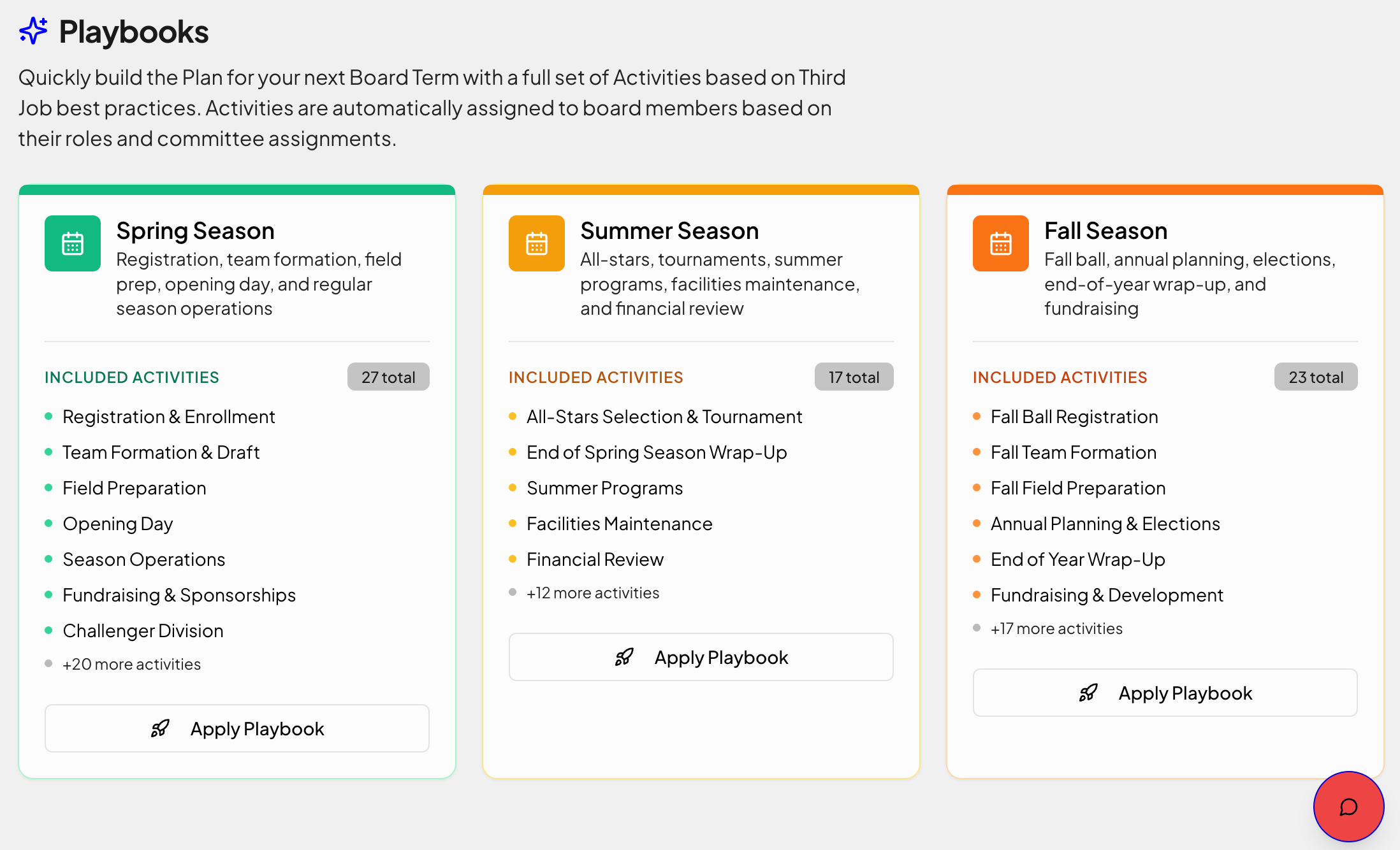
When a board starts a new term, it can select from pre-built Playbooks that automatically create the entire plan of activities for the board’s next term.
By simply knowing key dates, the system automatically:
Generates a complete list of To-Dos with due dates and priorities
Assigns Owners for tasks based on role and/or committee assignments
Helps visualize the status, dependencies and risks for the Board
No more blank page. The groundwork is laid and the weight is lifted off the shoulders of the Volunteer.
2. Rollover: Continuity by Design
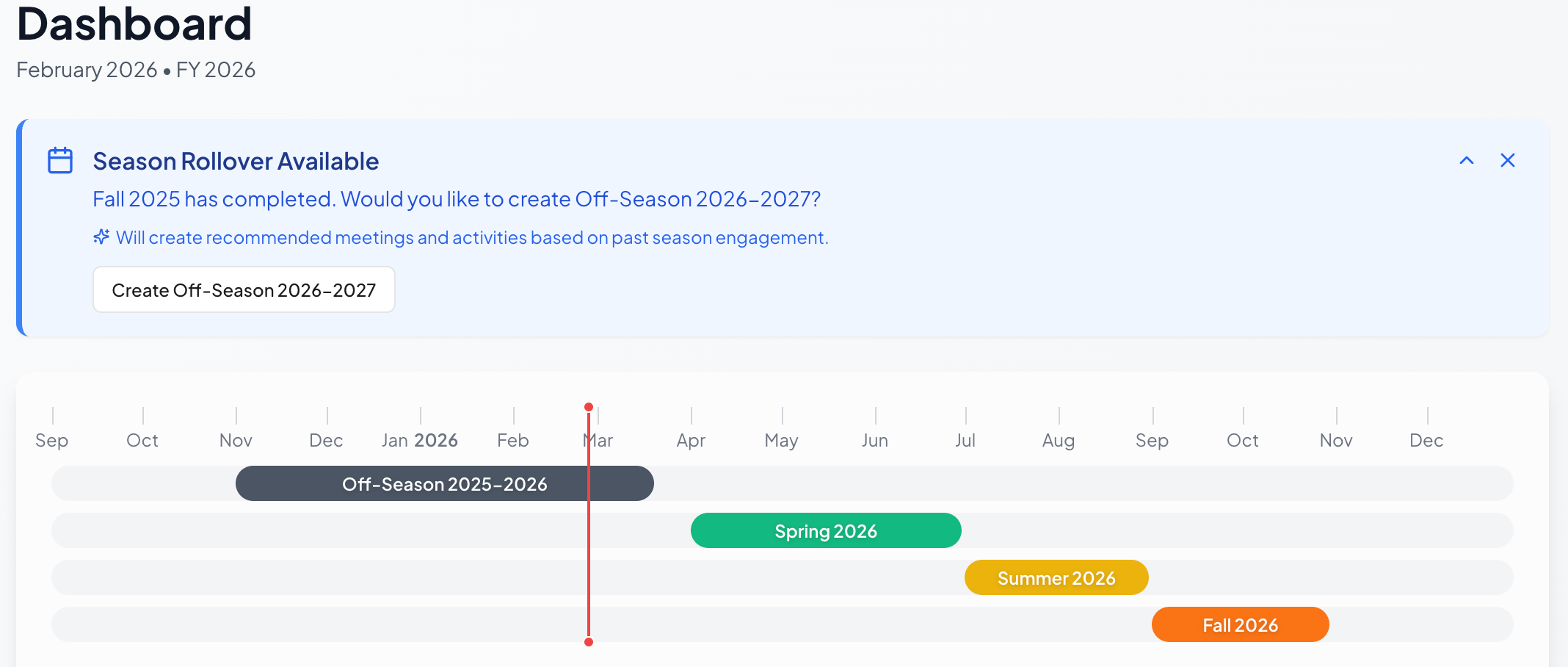
Playbooks are a great starting point for every volunteer board. However, let’s face it, if you did it last year, you’re going to do it again next year.
Using Rollover, boards can carry forward the learnings and momentum from the previous year’s plan. The Rollover automatically generates all of the following from last year’s plan:
Activities & ownership
Documents & notes
Dependencies & learnings
Rather than rebuilding the last term, you can refine it.
This creates continuity across leadership transitions. Historical knowledge becomes embedded in the system instead of walking out the door with outgoing board members.
3. Activity Assistant: Automate the To-Dos
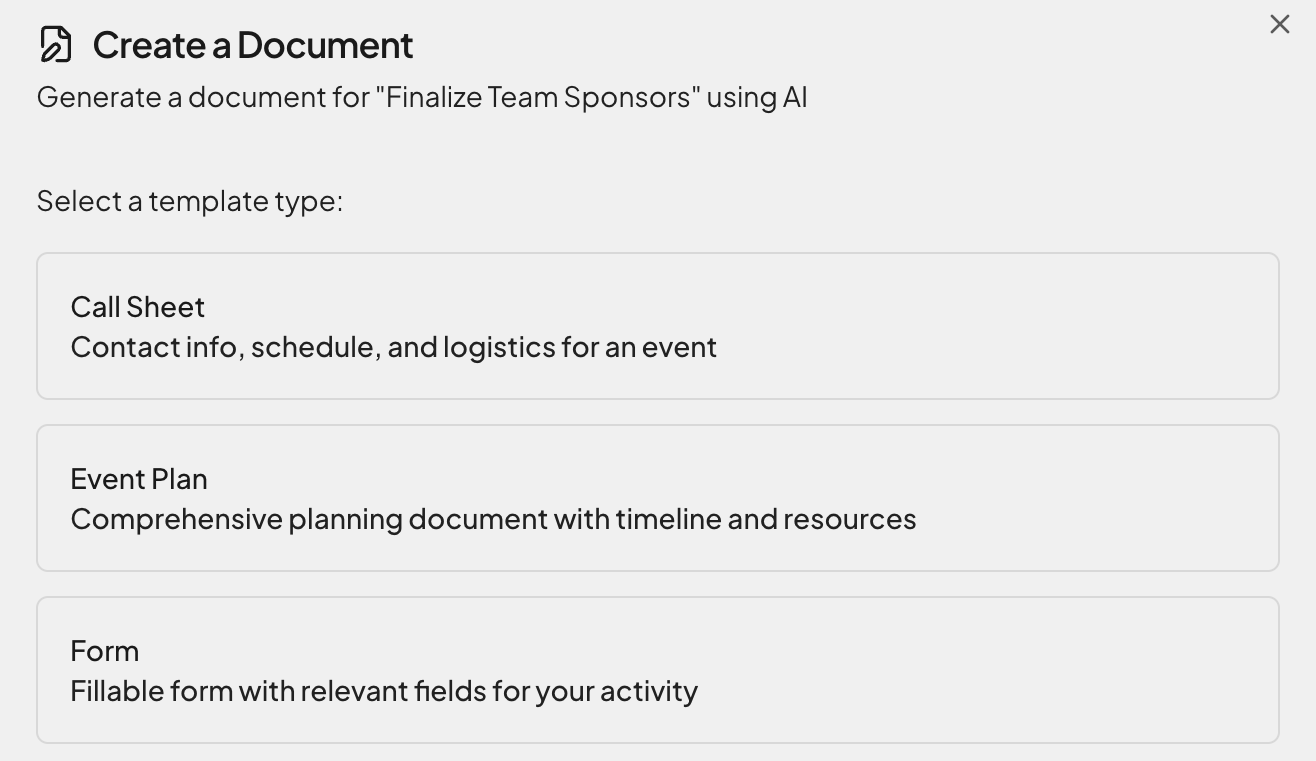
The advancement of AI presents an opportunity for Boards to finally ease the operational burden on their Volunteers.
An AI Task Assistant built specifically for Volunteer-Boards:
Completes tasks on your behalf
Drafts emails and communications for outreach
Creates assets for your board, your partners and your community
Summarizes last month’s meeting and assigns follow-ups
Regardless of your role on the board, AI uses historical patterns to suggest sequencing what should happen next. AI helps to make each task easier to complete for your Volunteers.
From Reactive to Intentional
When planning is structured:
Leaders feel more confident
Volunteers are more engaged
Responsibilities are clearer
Your Board achieves more
The next time someone joins your board, imagine that their first experience is not the quiet panic over a blank page, but a plan waiting for them.
Volunteer board members don’t lack commitment. They lack a system designed to help them.
It’s time to change that. Join us at Third Job as we reimagine how volunteer boards operate.