


The end of the season is a well-deserved celebration.
The games are finished. The kids had fun. The coaches gave their time. The parents showed up. The volunteers made it happen.
But for a volunteer board, the season does not just end. It has to be closed. And at the same time, the next season is already starting to take shape.
That makes the end of the season one of the most important operating moments of the year. It is the chance to celebrate what worked, capture what did not, and make next season easier for the next group of volunteers.
What Boards Should Be Doing At Season Wrap
The end of a spring season brings several events with it:
There are the fun moments:
League picnics
Player celebrations
Season awards
Coach recognition
Volunteer thank-yous
Parent appreciation
And there are the operational moments:
Equipment return
Facility updates
Field cleanup
Playoff coordination
All-Star planning
Graduation events
Sponsor follow-up
Board transition planning
It is a joyful time. It is also a busy time. But it is also the best time to reflect, because the season is still fresh.
Boards should be asking:
What worked well this season?
What created the most confusion?
What should we stop doing?
What should we do earlier next year?
What feedback did we hear from parents, coaches, and volunteers?
What knowledge needs to be captured before people move on?
Too often, this work gets skipped. Not because people do not care. Because everyone is tired.
The problem is that when boards skip the closeout, next year’s board starts from scratch.
How Volunteer-Board Operations Software Helps
Volunteer-Board Operations software like Third Job helps boards turn the end of the season into a simple operating process.
1. The Lookback
The first job is to review the season with accountability. Boards should be able to look at the goals they set and answer a simple question:
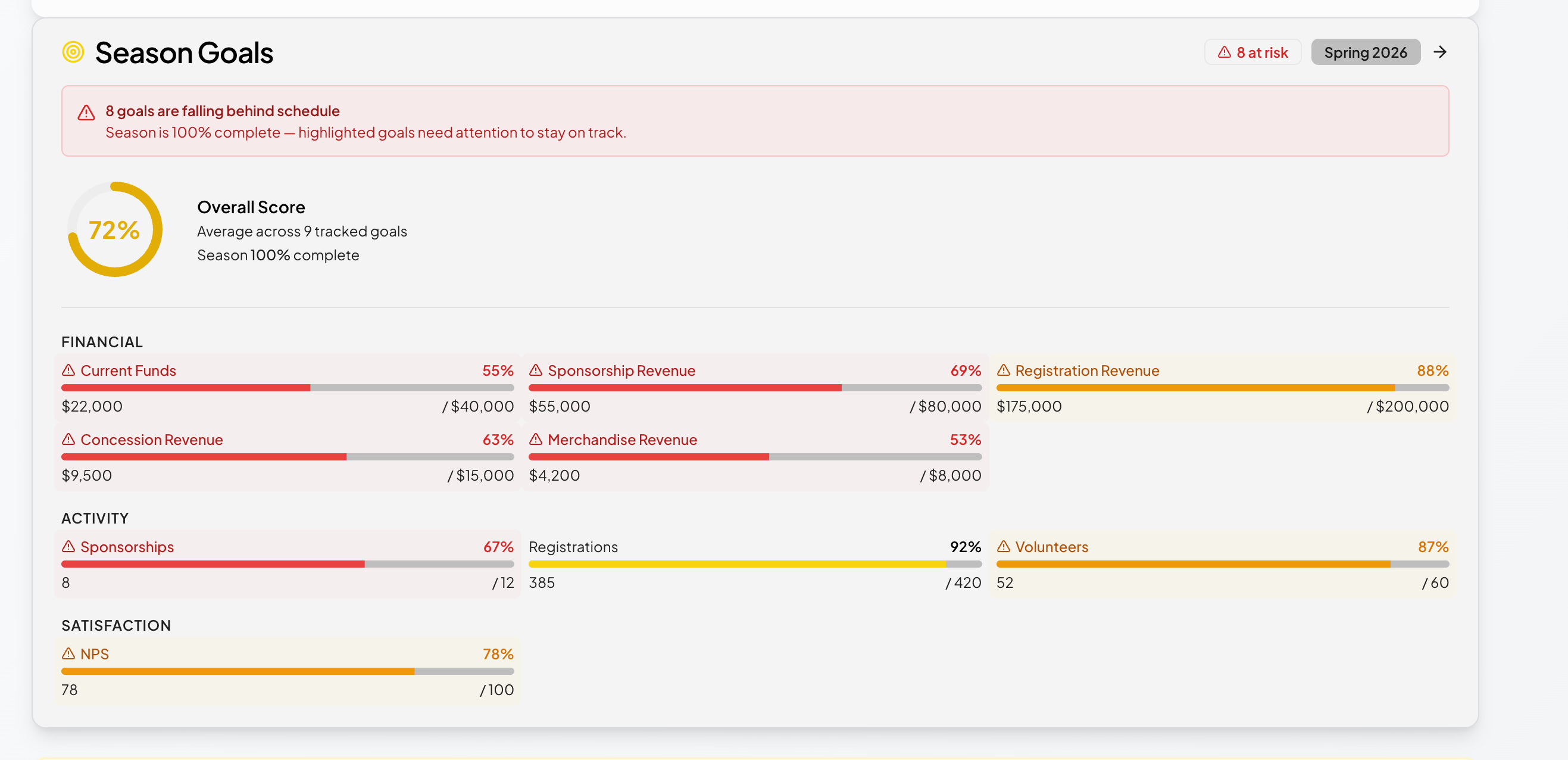
How did we do?
Goals in Third Job help boards track the key areas that matter most:
Financial
Current funds
Sponsorship revenue
Registration revenue
Concessions revenue
Merchandise revenue
Activity
Number of sponsorships
Number of registrations
Number of volunteers
Satisfaction
Net Promoter Score
Community satisfaction
Parent, coach, and volunteer survey feedback
This helps the board move from opinion to insight.
Instead of saying, “It felt like a good season,” the board can say:
Registration was up
Sponsorship was short of goal
Volunteer participation improved
Parents were happy overall
Communication needs to be better next season
That is how boards improve.
2. Planning Ahead
The second job is to carry those lessons forward.Because just as one season closes, the next one begins.
This is where Third Job’s Season Rollover and Playbooks help.

Boards can:
Roll last season’s plan into the next season
Update timelines based on what was learned
Save recurring checklists for events and milestones
Capture notes from outgoing board members
Preserve institutional knowledge
Give the next volunteer a better starting point
That matters because volunteer boards change. People rotate off. Kids age out. New parents step up.
A good closeout turns this year’s hard work into next year’s head start.
Finish Strong
A strong start matters. But a strong finish creates continuity.
Help volunteer boards spend less time recreating last season and more time making an impact in their community.
Learn more at thirdjob.ai.