

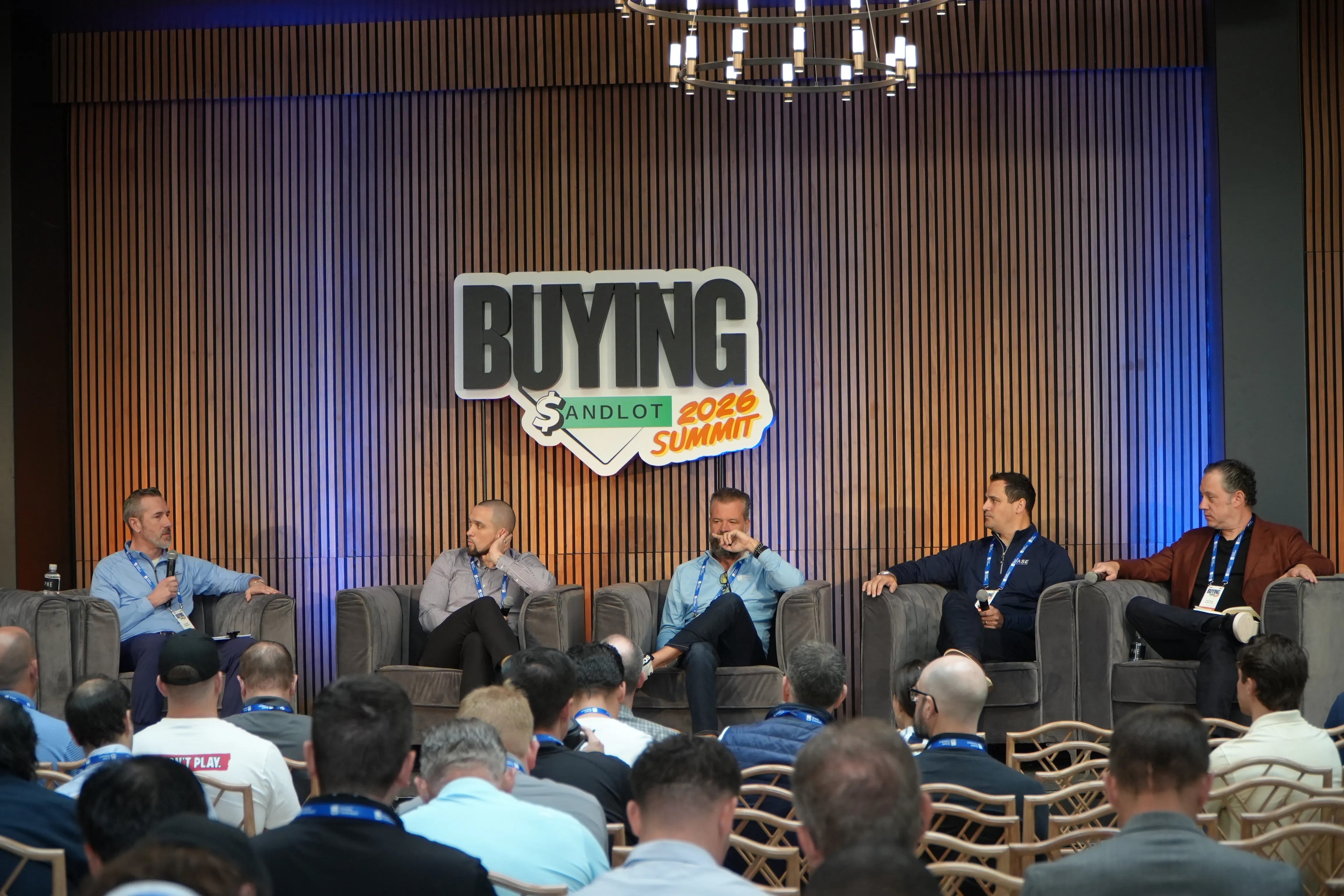
Third Job recently attended the Buying Sandlot Summit in Philadelphia, which brought together over 450 leaders across the youth sports ecosystem.
Youth sports is having a moment.
In attendance were league operators, technology companies, private equity investors, facility/real estate leaders, media companies, and many others shaping the future of how kids play sports.
One panel that particularly stood out to us was the “Professionalized Recreation: The (Mostly) Untapped Business Opportunity” panel, moderated by Jonathan Carone from Health Sports Parents.
And for us, three themes stood out:
1. Rec sports are often underserved
Youth sports is becoming more professionalized. There are more facilities being built, more capital entering the market, more operators scaling their organizations, and more attention being paid to how leagues run.
In many ways this can be positive, but it’s important to not lose sight of the importance of public recreation sports.
“Families want a lower cost and time option. They want their kids to be active and they want safe environments for their kids to grow.”
- Jonathan Carone, Healthy Sports Parents, Moderator
Before the travel team, the elite tournament, or the recruiting profile, there is a local rec league. A first jersey. A first coach. A first snack after the game. That experience is worth investing in.
Rec sports are often the front door to broader organized youth sports; where many kids first fall in love with the game. As youth sports becomes more professionalized, our collective goal must be to strengthen the foundation of our public leagues.
Investing in rec sports improves the experience for kids, families, and the community as a whole.
2. Technology can make the experience better for the community
When public leagues fall behind with resources, the experience suffers. The opportunity for technology and AI is clear. Parents want clearer communication. They want schedules that are accurate, leagues that run smoother, & fewer last-minute surprises.
Software can automate repetitive work to help the people running youth sports reduce the administrative burden and deliver a better experience for all.
“If you can come up with a solution to those problems, there is money to be made in an ethical way that still serves families.”
- Jonathan Carone, Healthy Sports Parents, Moderator
When operations improve, leagues can increase registrations, grow sponsorships, and get more parents & players to return each year.
3. Volunteer Operators are heroes in their community
Speakers kept coming back to the same group of community influencers: the volunteer board members running local leagues.
Volunteer-Board Operators are doing this work without the systems, documentation, or continuity they need to be successful. Every season can feel like starting over. Every new board has to relearn what the previous board already knew.
“If you’ve ever been a volunteer, nine times out of ten, you signed up for a 40 hour job you didn’t want.””
- John Erlandson, President Youth Athletes United, Panelist
Their first job is their career. Their second job is their family & friends. Their third job is helping run a community organization.
And too often, that third job is harder than it should be.
The road ahead for Recreation sports
We believe volunteer-run organizations deserve better tools.
The Buying Sandlot Summit reinforced that youth sports is changing quickly. There is energy, investment, and innovation coming into the space. That momentum is exciting.
But as the ecosystem grows, we need to make sure the local leagues, rec programs, and volunteer-run organizations remain at the foundation of a healthy community.
Visit Third Job to learn more about how we even the playing field for Volunteer-Run organizations.